
May 13, 2026
AWS's Inferentia2 case shows why inference economics can decide whether always-on video intelligence scales with healthy margins.
Market Signal
AWS described an always-on vision workload that reduced deployment cost by 83% after moving from on-demand GPUs to Inferentia2. For an ISP, the useful point is not the specific workload; it is that video analytics margin depends on the architecture behind continuous inference.
ISP Reading
Every camera that runs continuous analysis consumes compute, network capacity, and operations. If unit cost is not controlled, growth can damage margin. Optimized inference helps the operator offer more features, sustain SLAs, and scale services without overbuilding infrastructure too early.
How It Connects With Horus ISP
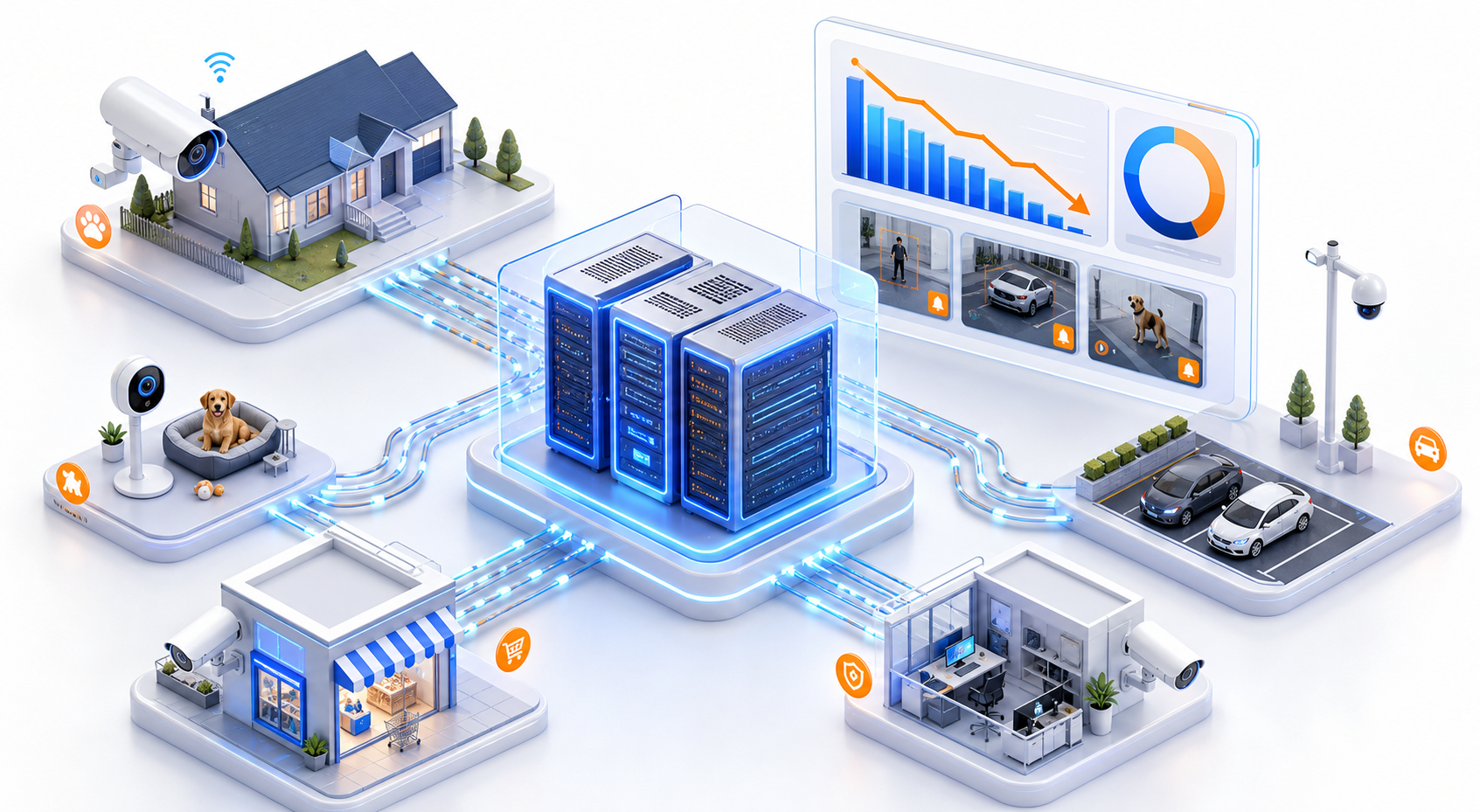
Horus ISP turns that efficiency into an operable offer. The ISP can process streams close to its network, organize events, users, and permissions in a multi-tenant platform, and decide which inference runs for each customer or plan. The practical message is simple: selling smart video means managing the cost of serving each camera.
Service Or Package Enabled
- Continuous detection for shops and small businesses.
- Intelligent monitoring for schools, buildings, and communities.
- Premium plans with person, vehicle, or anomaly detection.
- Verified video for residential customers with existing cameras.
Sources
- AWS Machine Learning Blog. "Cost effective deployment of vision-language models for pet behavior detection on AWS Inferentia2". 2026-05-06. https://aws.amazon.com/blogs/machine-learning/cost-effective-deployment-of-vision-language-models-for-pet-behavior-detection-on-aws-inferentia2/