
News

Market signals, launches, and operating decisions for ISPs building edge AI, managed video, and monetizable cloud services.

Synthetic video: evidence review as an ISP service
Preserving originals and documenting review can extend the service around an incident.

From AI revenue to margin per camera
Before expanding the datacenter, attribute revenue and costs to each video service.

NVIDIA PAIR: evaluating local event inference for ISPs
Distributing independent tasks creates a way to test local services with measurable cost per event.
Selling verified improvements to video analytics
Model adaptation can become a service measured per site and per approved version.

OTel 2.0: operating AI inside the ISP datacenter
Local deployment requires models, infrastructure and verifiable operating processes to work together.
MTN combines datacenters and networks: lessons for multi-site ISPs
Regional infrastructure can support a unified offer of video, evidence and support.
SK Horizon: investing in datacenters against contracted services
SK Telecom’s announced restructuring highlights the need to distinguish capacity, operations and commercial returns.
AI connectivity: turning the ISP network into a video service
Interconnection demand creates room for video packages with regional retention and measurable performance.
Kumul Cloud Infinity: the business value of keeping video nearby
A local datacenter supports evidence services with defined location, access and recovery.
AT&T packages managed intelligent video with edge and cloud
Live video, optimized streaming, analytics, and alerts validate a carrier-grade offer beyond connectivity.
Telco AI moves from pilots to revenue
The focus on monetization favors concrete visual offers built on proximity, sovereignty, support, and SLA.
SaaS sovereignty becomes a pricing lever
Topology, isolation, keys, access, and inference enable sovereign tiers without breaking multi-tenant economics.
Zankore turns operator AI infrastructure into a commercial asset
The full-stack platform shows how regional compute can become governed, profitable visual services.
Measure latency before choosing a region and architecture
Measuring real routes helps decide what runs on site, in the ISP datacenter, or in cloud without compromising SLA or cost.
FiberCop turns exchanges into a national edge datacenter network
More than one hundred nodes validate operator exchanges as a commercial platform for analytics, evidence, and sovereign services.
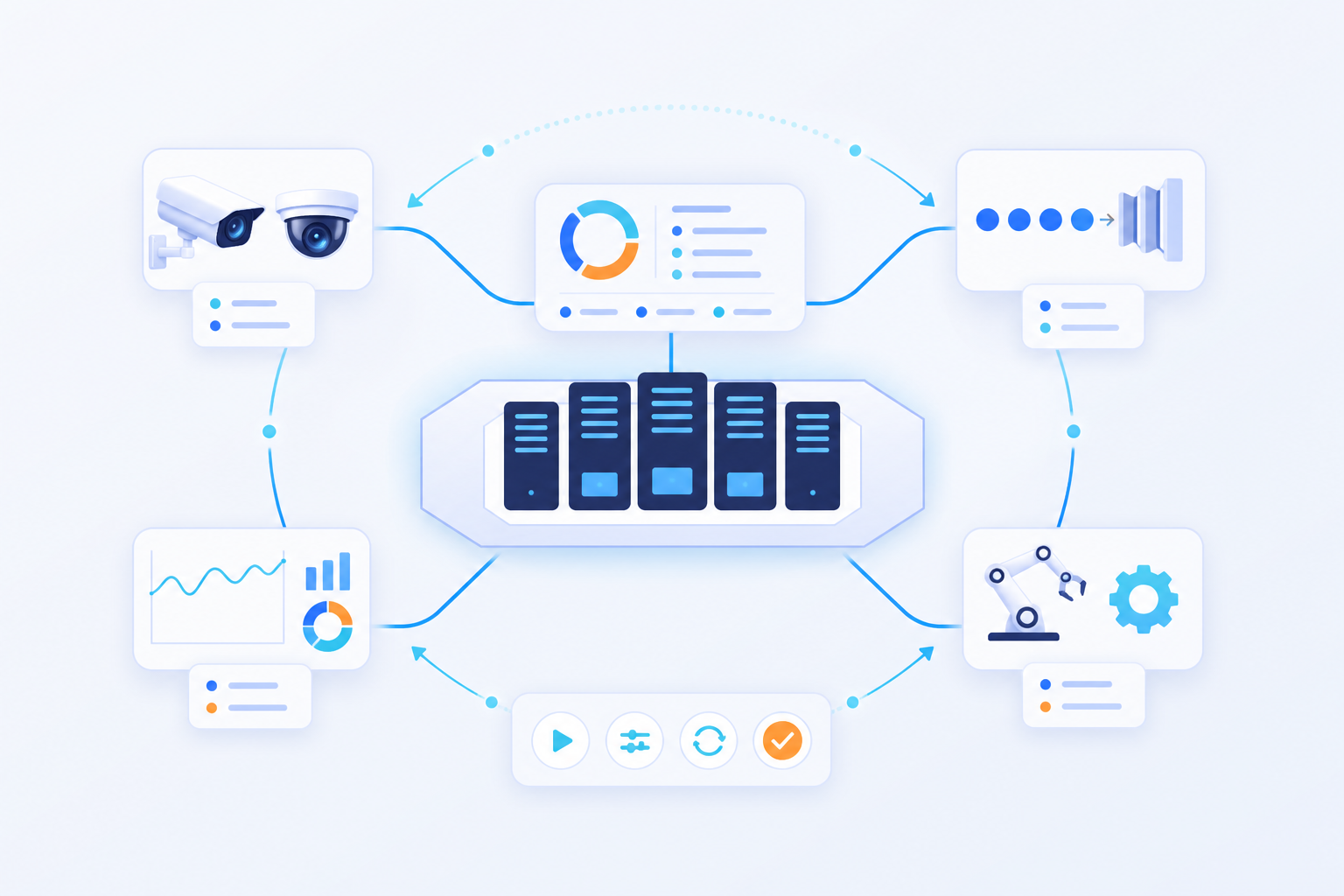
Telefónica makes autonomous operations concrete for visual services
Network autonomy confirms that scaling visual services requires automated events, assurance, permissions, and support.
Context-aware video agents turn imagery into action
NVIDIA combines video analysis, knowledge retrieval, and structured reports to produce actionable evidence, tickets, and escalations.
Telco AI infrastructure now has a commercial playbook
Edge, sovereignty, and inference are now part of the infrastructure business and open a concrete path to monetize visual services.
A private knowledge plane improves control and cost
A private serverless architecture combines agents, search, and streaming without exposing sensitive knowledge or carrying idle cost.
The edge as a physical AI platform lowers device costs
Offloading intelligence to the edge simplifies devices and enables coordination, evidence, and automation as a service.
The ISP AI datacenter as a profitable platform
SK Telecom's planned scale confirms that carrier AI infrastructure can become a business, not only internal support.
Hybrid closed loops for visual service operations
Useful autonomy combines local low-latency loops with centralized reasoning, guardrails, and human approval.

Digital twins to lower MTTR in visual services
An operational twin of cameras, nodes, storage, and analytics makes it possible to correlate failures and recover service with better context.
Consumption monetization for AI visual services
Charging for events, searches, evidence, and automations aligns compute cost with delivered value.
Verified telco data to scale trustworthy AI
Telco Common Corpus shows that data quality, licensing, and traceability are now commercial assets for AI services.
AI efficiency in the ISP datacenter
The fight for performance per watt and lower TCO strengthens the case for profitable visual inference in the ISP datacenter.
Video super-resolution as a premium add-on
Selective evidence enhancement makes it possible to sell more value on existing cameras without massive hardware replacement.
Telecom sites become edge hubs for visual services
China Tower's scale shows that telecom sites can evolve from passive infrastructure into edge hubs with power, resilience, and inference.
Distributed sovereign inference for visual services
The TELUS and Arrcus PoC validates a distributed inference fabric for critical services with low latency and sovereign control.
A hybrid autonomous stack to lower visual service OPEX
Observability, inventory, assurance, and automation reduce operating cost when integrated into a well-governed hybrid stack.
A telco-grade AI foundation makes ISP services operable
The GSMA and TM Forum collaboration advances specialized models, benchmarks, and APIs for accurate, interoperable, dependable telco AI.

Governed AI agents for visual service operations
Persistent and auditable agents can lower operating cost in multi-tenant visual services when they work under policy and traceability.
Unified data fabric to scale Horus ISP
An agnostic data fabric reduces friction across edge, datacenter, and cloud, accelerating visual services based on events and evidence.
Unified low-latency automation for visual services
Useful automation no longer works domain by domain: it needs streaming data, topology, and low-latency closed loops.
Sovereign edge as a playbook for ISP visual services
Demand for federated sovereign edge validates a hybrid, low-latency video analytics offer controlled from the ISP network.
Governance and assurance for sovereign visual services
Sovereign AI becomes sellable only when it includes traceability, policies, observability, and demonstrable control over data, models, and evidence.
The ISP datacenter as a base for sovereign AI
The Telia and Brookfield move validates the operator datacenter as a regional platform for AI services, evidence, and video analytics.
AI revenue needs operable edge services for ISPs
AI revenue potential for telcos is real, but the first sellable cases are concrete edge services such as video analytics, evidence, and event automation.
Auditable sovereign controls for regulated visual services
Regulated accounts no longer ask only for data residency: they require verifiable control over keys, access, support, and evidence.
Sovereignty as a service for ISPs with Horus ISP
Sovereignty is moving from an abstract attribute into a sellable layer of control, residency, and operations for regulated visual services.
Sovereign AI and semantic search as a service
Bell points to a strong ISP play: combine local datacenter control, sovereignty, and semantic search to sell premium visual services.
Federated sovereign edge as a commercial playbook
The European edge federation story gives ISPs a clear reading: sell regional operational coverage, not only local infrastructure.
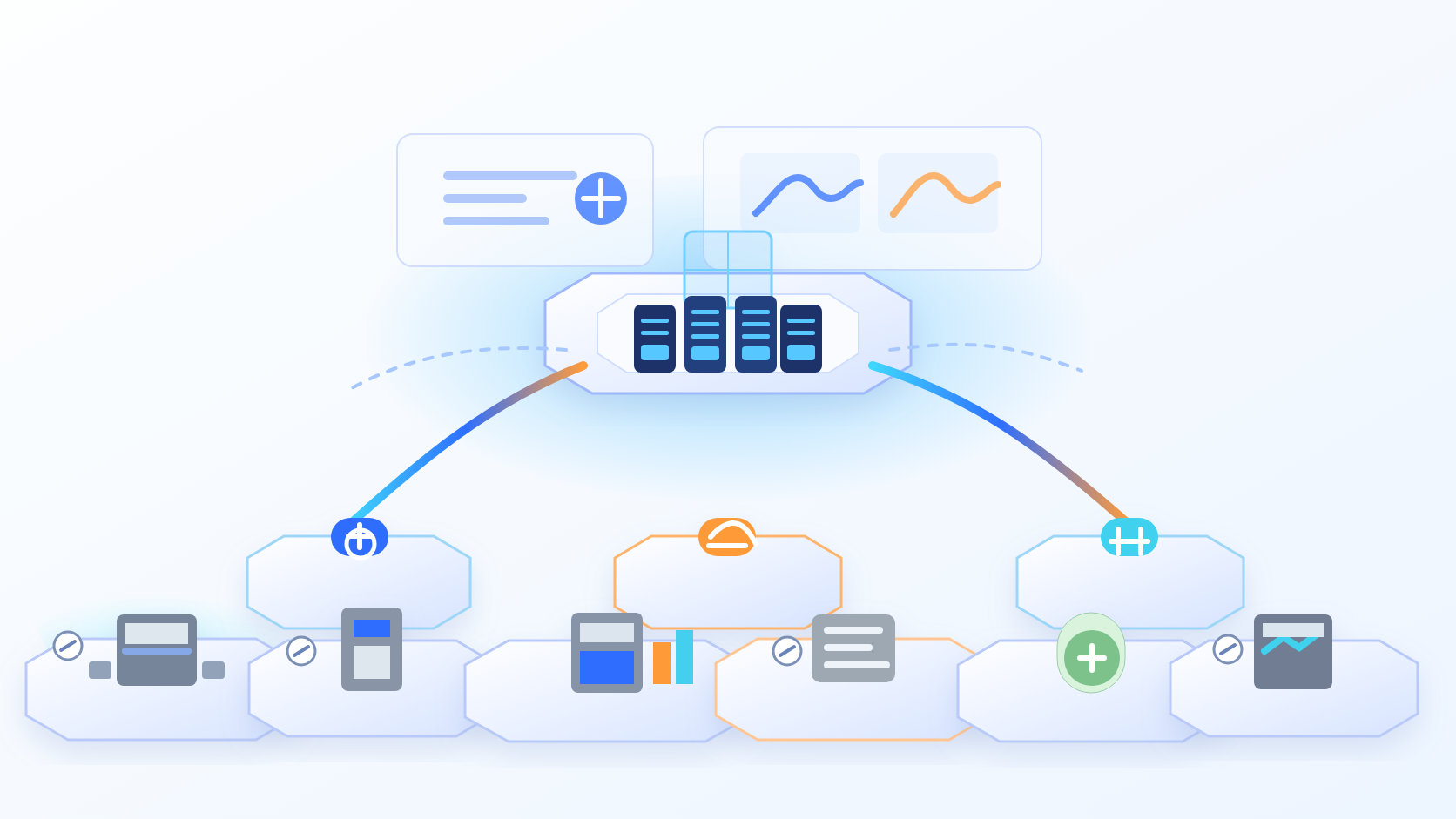
Video intelligence that is easier to productize
NVIDIA is lowering the friction to create new vision AI features, improving the economics of premium services on top of Horus ISP.
AI datacenters and sovereign cloud as a new business
SoftBank's AI strategy confirms a new phase: the operator datacenter is becoming a platform for inference, GPU cloud, and sovereign services.
Private edge and sovereignty as a monetization playbook
GSMA points to a clear route for operators: use edge compute, private datacenters, and data sovereignty as the base for new AI revenue.
Stable video uplink and efficient edge for critical services
InterDigital offers a useful signal for ISPs: stabilizing video uplink and improving edge efficiency can make critical visual services easier to sell.
The ISP network as a distributed physical AI platform
Physical AI pilots on telco infrastructure reinforce a commercial thesis: operators can host visual intelligence near the point of capture.
Resilient hybrid architecture for Horus ISP nodes in the ISP
Hybrid resilience patterns help design regional visual services that keep operating when connectivity is imperfect.
Video analytics with cost and latency under control
Separating workflows by precision, cost, and latency helps an ISP package video analytics with a more rational service economy.
Video semantic search at scale: a premium service for ISPs
Ring's pgvector case shows how video archive search can balance scale, latency, and cost to create more valuable evidence services.
Lower-cost camera inference: a path to stronger video analytics margin
AWS's Inferentia2 case shows why inference economics can decide whether always-on video intelligence scales with healthy margins.
Semantic search for ISP video archives: from passive recording to premium evidence
Multimodal retrieval shows how managed recordings can become searchable, useful, and commercially stronger services.
Two-node edge high availability: a pragmatic base for Horus ISP services
Simpler resilient edge platforms can lower the barrier for ISPs to launch regional video, recording, and inference services.
What an ISP can learn from the new AI video stack
AWS Elemental Inference shows that video has better margin when intelligence is embedded in the normal service flow.
Data sovereignty and lower AI cost: why the ISP datacenter matters more
Processing close to the data helps reduce cost, latency, and exposure when a service combines video, AI, and operating obligations.
Not every video analytics workload should run the same way
Multimodal models help an ISP organize a catalog by cost, accuracy, latency, and commercial value.
If AI is a new telco revenue stream, ISPs need a first sellable service
AI revenue can start with managed video analytics from the operator edge, not with an abstract platform.
Smart-X distributed inference: splitting AI improves total service cost
An architecture across camera, ISP edge, and cloud can reduce traffic, lower latency, and package video analytics with better margin.
Edge AI is not telco hype: it is a path to profitable video offers
Edge AI growth matters when an ISP can turn it into recurring vertical services for security, commerce, schools, and cities.
Edge video analytics: process before upload to protect margin and privacy
Video services should not be designed as mass upload to the cloud: edge processing sends events, keeps evidence, and controls cost.
Edge, video analytics, and new services: what this section will track
This section gathers market signals, launches, and operating decisions that help explain how an ISP can turn existing infrastructure into intelligent, monetizable services.
The ISP datacenter as a new visual intelligence layer
The AI grid thesis shows how telco edge can start with video analytics, measure ROI, and scale models as adoption grows.

Open Telco AI: evaluable models for governed ISP services
GSMA's initiative reinforces that telco AI needs models, benchmarks, and reliable operations, not isolated experiments.
Telco AI grids: monetizing ISP infrastructure with video analytics
AI grids turn distributed operator sites into a low-latency inference layer for video, security, and smart city services.
Telco AI delivers ROI when it becomes an operable service
NVIDIA's telco survey frames a practical question: which AI services can an ISP sell using its datacenter and customer base?