
May 5, 2026
Video services should not be designed as mass upload to the cloud: edge processing sends events, keeps evidence, and controls cost.
Market Signal
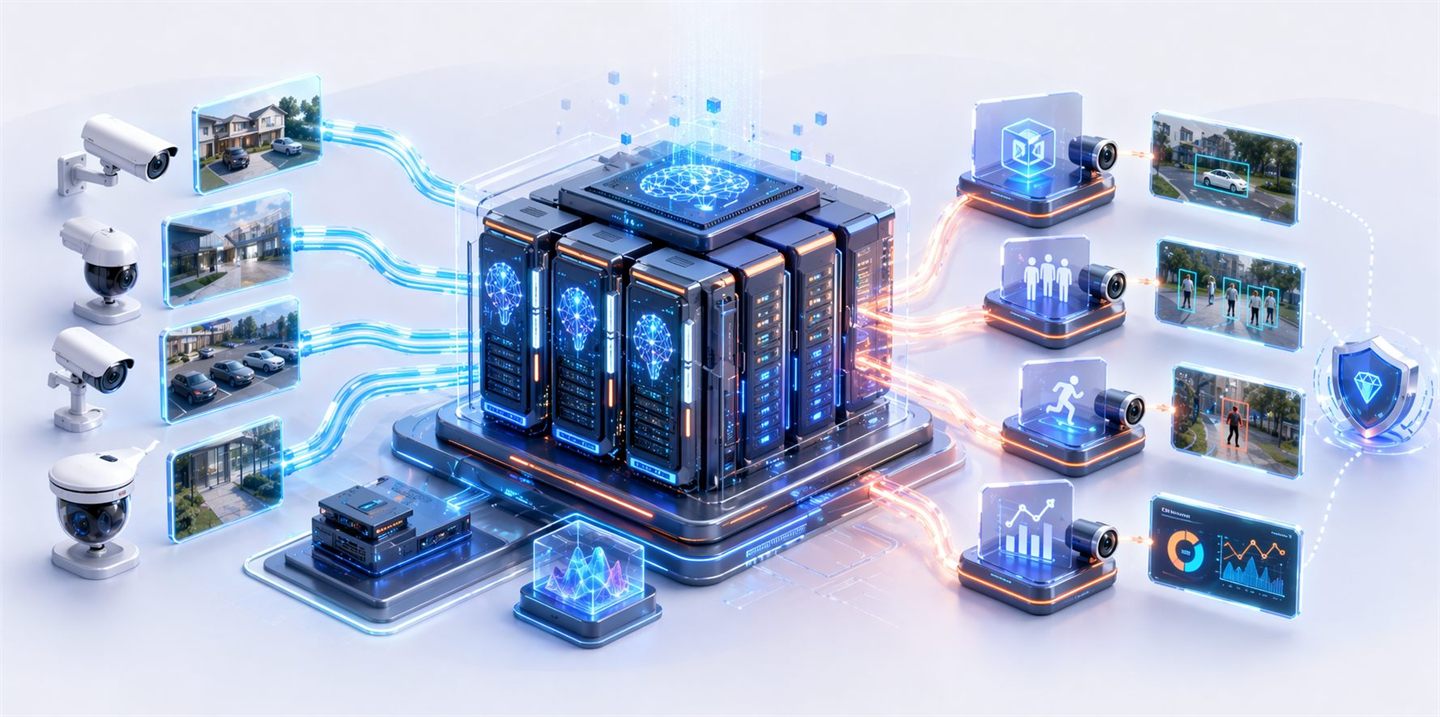
AWS shows an architecture where detection happens close to the camera before video is sent to cloud services. For an ISP, the commercial reading is simple: when every camera streams everything all the time, the service becomes expensive to operate and hard to scale.
ISP Reading
Processing on the camera, CPE, or operator datacenter reduces upstream traffic, lowers latency, and improves privacy. It also enables differentiated plans: basic viewing, continuous recording, event-based recording, premium analytics, or SLA-based retention. Technical efficiency becomes commercial margin.
How It Connects With Horus ISP
Horus organizes a hybrid architecture in which the ISP datacenter acts as an intermediate point between cameras and cloud. Analytics can run there, recordings can be retained, and only relevant events need to synchronize with Horus Cloud for apps, notifications, and multi-tenant management.
Service Or Package Enabled
- Residential cameras with selective event upload.
- Shops with local retention and activity alerts.
- Communities with analytics centralized in the ISP datacenter.
- Tiered plans for viewing, recording, analytics, and response.
Sources
- AWS IoT Blog. "Efficient video streaming and vision AI at the edge with Realtek, Plumerai, and Amazon Kinesis Video Streams". 2025-07-08. https://aws.amazon.com/blogs/iot/efficient-video-streaming-and-vision-ai-at-the-edge-with-realtek-plumerai-and-amazon-kinesis-video-streams/