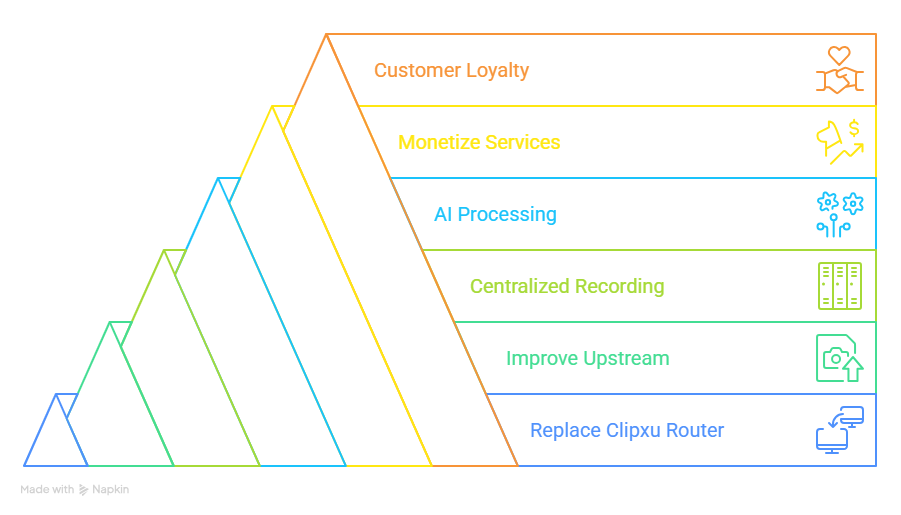
Hybrid architecture connecting customer cameras, ISP infrastructure, Horus Cloud, recording services, and AI-ready processing.
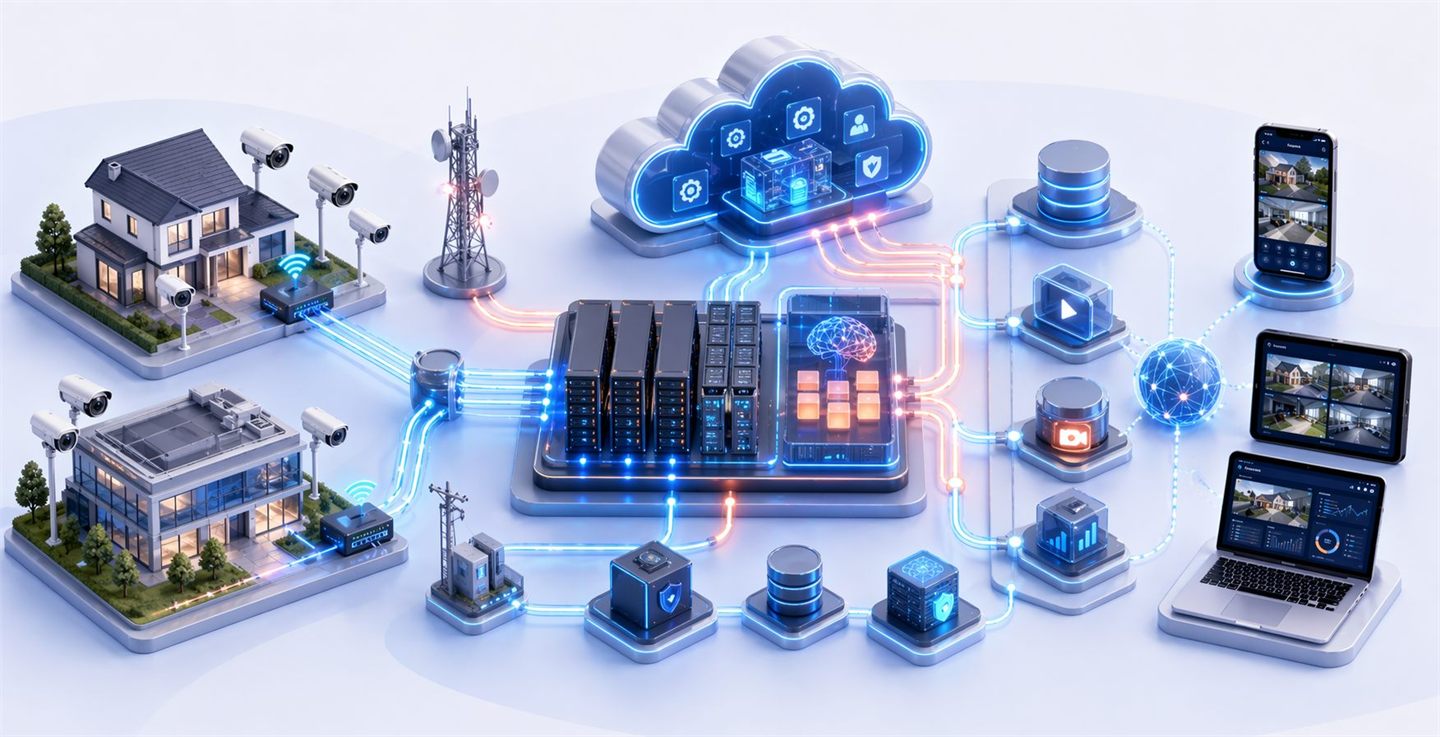
Hybrid architecture for operator services
Horus is designed to split service execution between the customer site, the ISP, and the cloud. Cameras stay on the customer LAN, while the operator can centralize service components for viewing, recording, and analytics inside its own infrastructure.
1. Customer side
- The ISP router manages camera connectivity on the local network.
- Discovery and onboarding work with standard camera access paths such as ONVIF and RTSP.
- The customer keeps the installed cameras while the service model evolves above them.
2. ISP side
- Horus services in the operator environment maintain one service connection per camera and quality level.
- The same stream can support live viewing, recording, and future analytics without duplicating unnecessary upstream traffic.
- ISP AI hardware can process streams as inputs for inference engines and turn video into actionable events.
- Capacity grows horizontally, so infrastructure demand follows contracted services in a predictable way.
3. Cloud side
- Horus Cloud provides centralized control, account management, mobile integration, and service coordination.
- Multi-tenant operation stays consistent across customers, communities, and partners.
- AI-generated events and authorized streams feed notifications, mobile views, and operational workflows.
- New services can be activated without redesigning the full field architecture.
4. Why it matters for the ISP
- New recurring revenue on top of connectivity
- Better customer retention through sticky managed services
- More efficient use of streaming bandwidth
- Stronger differentiation against connectivity-only competitors