
May 20, 2026
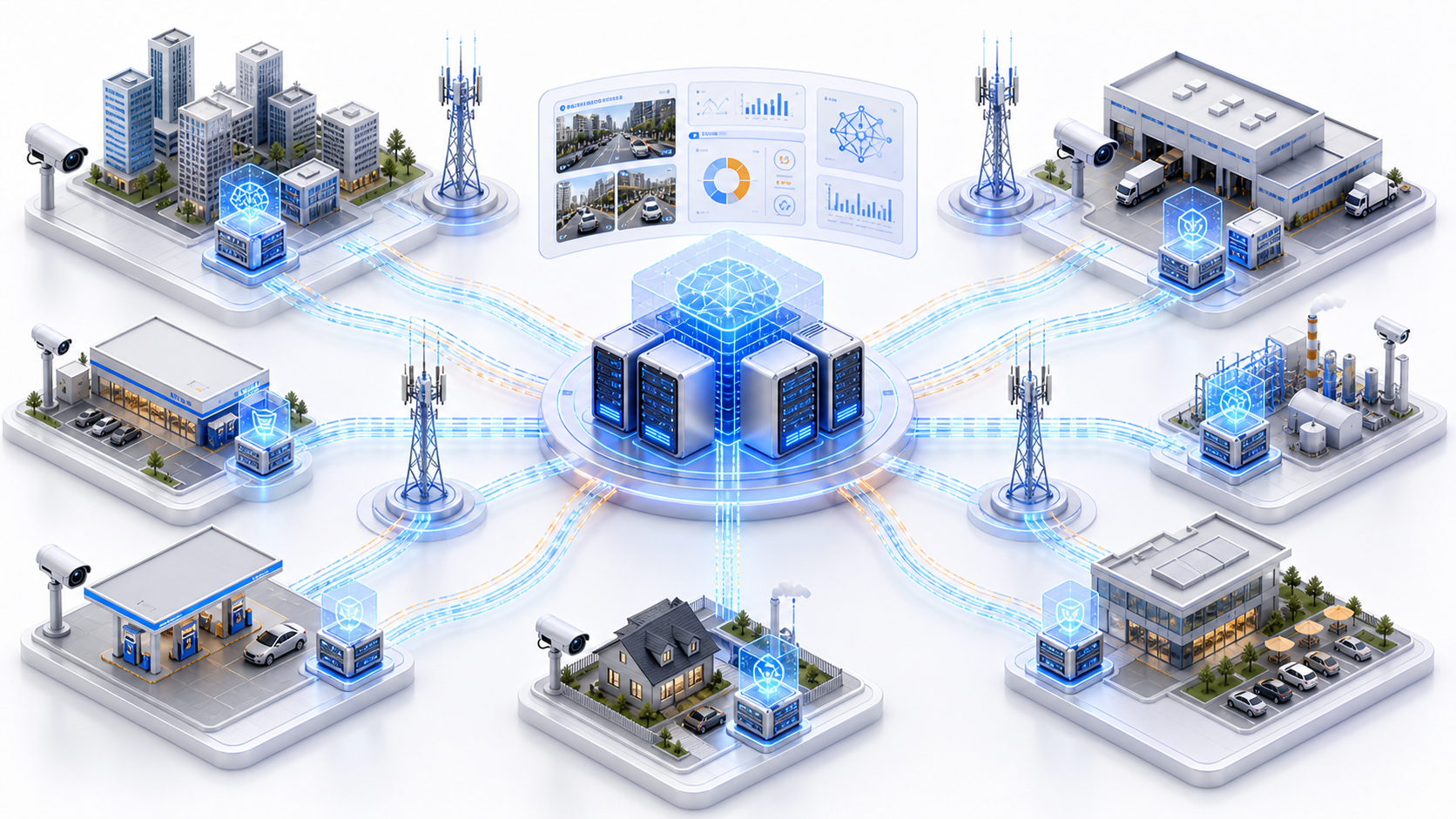
Physical AI pilots on telco infrastructure reinforce a commercial thesis: operators can host visual intelligence near the point of capture.
Market Signal
NVIDIA, T-Mobile, and partners demonstrated physical AI pilots on AI-RAN-ready distributed edge infrastructure. For an ISP, the lesson is not to copy a mobile architecture exactly; it is to recognize a role shift. The network can become a platform for low-latency visual services.
ISP Reading
Processing near cameras and sensors reduces latency, avoids relying only on more expensive endpoint hardware, and lets the operator package regional services on owned infrastructure. The ISP captures value beyond transport through analytics, search, alerts, and evidence as recurring commercial components.
How It Connects With Horus ISP
Horus ISP turns that ambition into product: cameras, events, users, rules, evidence, and search operated in a multi-tenant model. The ISP can start with concrete visual services and scale nodes according to demand instead of selling an abstract distributed AI promise.
Service Or Package Enabled
- Incident detection in cities or urban corridors.
- Managed video analytics for retail, industry, and service stations.
- Scene summaries and search for monitoring centers.
- Regional analytics with less dependence on smart hardware on site.
Sources
- NVIDIA Newsroom. "NVIDIA, T-Mobile and Partners Integrate Physical AI Applications on AI-RAN-Ready Infrastructure". 2026-03-16. https://nvidianews.nvidia.com/news/nvidia-t-mobile-and-partners-integrate-physical-ai-applications-on-ai-ran-ready-infrastructure